
Air, Space Forces pick up research pace for orbital cargo delivery
The current focus is on low cost, high volume commercial cargo reentry pods, an Air Force Research Laboratory spokesperson told Breaking Defense.
The current focus is on low cost, high volume commercial cargo reentry pods, an Air Force Research Laboratory spokesperson told Breaking Defense.
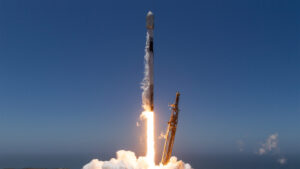
The service now expects 170 NSSL Phase 3 Lane 1 launches between 2025-2034, up from 60.


A decorated combat aviator and biotech CEO advocates preparing for novel viral threats before the next crisis.

NSSL will be okay because it can still rely on the Falcon 9 workhorse," said Todd Harrison, senior fellow at the American Enterprise Institute.
The company's announcement did not explain how the new National Security Group would change, if at all, Blue Origin's current organization and/or practices under its national security unit headed since August by Tom Martin.
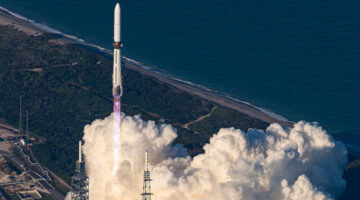
Blue Origin also stuck the landing of New Glenn's reusable first stage, becoming only the second company after SpaceX to do so.
While the number of launches contracted to Blue Origin is small, the award represents a vote of confidence for the company founded by Amazon billionaire Jeff Bezos.

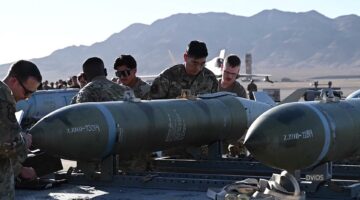
Threats have changed the range, seeking and attack capabilities necessary to ensure effectiveness.
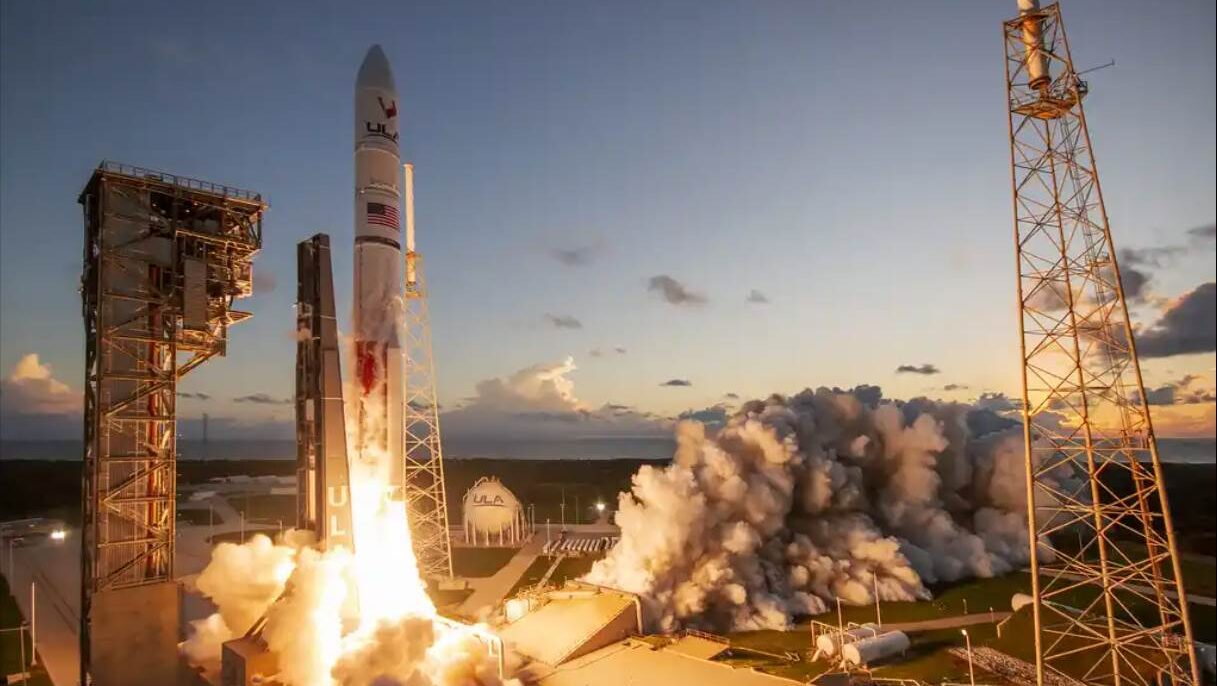
With that thumbs up from Space Systems Command’s (SSC) Assured Access to Space program office in hand, ULA now is the second fully certified launch provider, along with SpaceX, cleared under the Space Force's National Security Space Launch (NSSL) program.
Service leaders see the launch vehicle as a future competitor to SpaceX's Falcon series rockets that currently have a lock on the most critical launches under the Defense Department's National Security Space Launch program.

Lt. Gen. Philip Garrant, chief of the Space Force’s Space Systems Command, stated that the service will not move forward with awards for the newest round of the National Security Space Launch program until Congress approves the fiscal 2025 budget.

Should Vulcan get the Space Force go-ahead, both planned NSSL missions are expected to fly by the end of the year as planned.

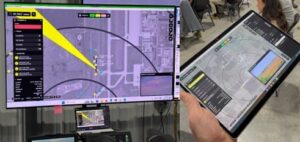
Architecture that linked sensors, C2, RF effects, and lasers into a distributed c-UAS kill chain.

The OSP-4 contract vehicle was designed by the Space Force to allow both mature launch providers and promising new companies — that is, those judged as about a year away from launch capability — to vie for individual task orders for missions that don't require services under the more critical National Space Security Launch program.
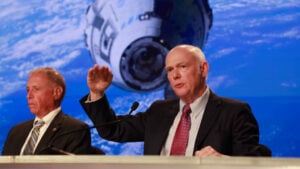
ULA CEO Tory Bruno explained that Air Force space acquisition czar Frank Calvelli asked Lockheed Martin and Boeing to create an independent review team to "help" Vulcan production rates and launch site readiness remain on track.

The planned launches, which will take place starting in FY26, include sending a second SILENTBARKER watchdog satellite jointly developed by the service and the National Reconnaissance Office to geosynchronous Earth orbit (GEO).
Interested companies have until Dec. 15 to respond to the service's dual requests for proposals: one for the critical, high-dollar NSSL Phase 3 Lane 2 launches; and the other for Lane 1 small launches.